
Buprenorphine vs Methadone: Which Treatment Is Right?
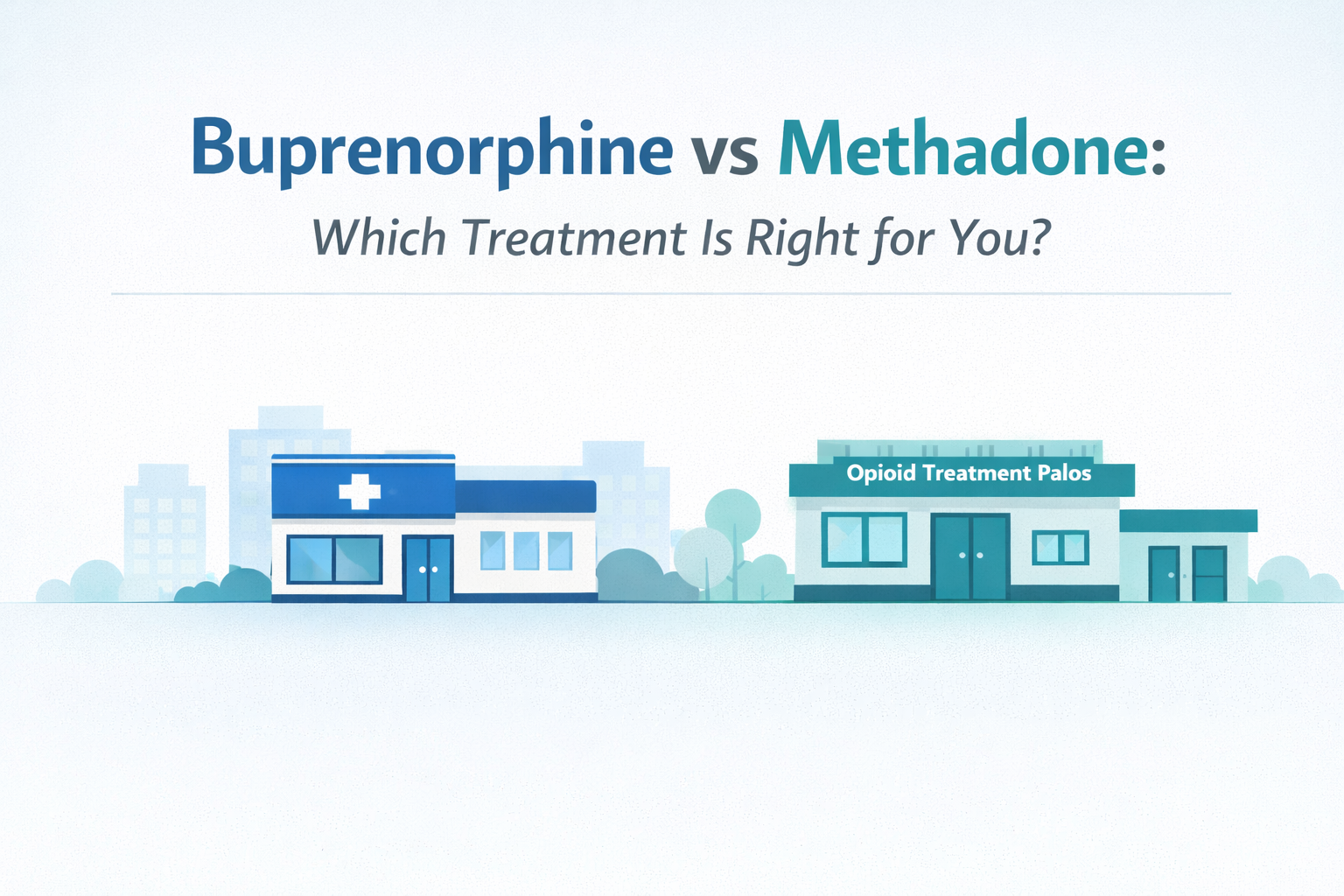
The opioid crisis continues to challenge communities across the United States. The CDC reported over 110,000 overdose deaths in 2023, and while provisional data suggests a slight decrease in 2024, opioid use disorder (OUD) remains a major public health concern. Effective, evidence-based treatment remains critical.
Medications for opioid use disorder (MOUD) are among the most effective tools in modern medicine. Research consistently shows that both buprenorphine and methadone significantly reduce overdose risk and improve long-term stability. Yet millions of individuals who could benefit from treatment remain without access.
If you are considering treatment, understanding the differences between buprenorphine and methadone can help you make an informed decision in consultation with a qualified healthcare provider.
What Is Opioid Use Disorder?
Opioid use disorder is a chronic medical condition involving changes in brain circuitry related to reward, stress, and self-regulation. Like other chronic illnesses, it often requires long-term management.
Both buprenorphine and methadone are FDA-approved and endorsed by major medical organizations, including:
- The American Society of Addiction Medicine (ASAM)
- The World Health Organization (WHO)
- The National Institute on Drug Abuse (NIDA)
- The Substance Abuse and Mental Health Services Administration (SAMHSA)
Buprenorphine: Flexibility and Office-Based Access
How Buprenorphine Works
Buprenorphine is a partial opioid agonist, meaning it activates opioid receptors but only partially. This results in:
- Reduced cravings
- Relief from withdrawal
- Lower overdose risk due to a “ceiling effect”
- High receptor affinity that blocks other opioids
Its ceiling effect reduces the risk of respiratory depression compared to full opioid agonists.
Access and Telehealth Expansion
Following the elimination of the federal X-waiver requirement in 2023, buprenorphine can be prescribed by any licensed clinician with standard DEA registration.
This policy shift significantly expanded access through:
- Primary care offices
- Community health centers
- Hospitals
- Telehealth platforms
Telehealth expansion has particularly benefited rural populations, where daily travel to treatment centers may previously have been impractical or impossible.
Formulations
- Sublingual tablets or films (often combined with naloxone)
- Monthly extended-release injections
- Long-acting implants
These options allow for flexibility and individualized treatment planning.
Methadone: Structured Stability and Retention
How Methadone Works
Methadone is a full opioid agonist, meaning it fully activates opioid receptors. This can provide:
- Strong suppression of cravings
- Elimination of withdrawal
- Stabilization for individuals with high opioid tolerance
It has been used in opioid treatment for over 50 years and remains one of the most researched addiction medications.
Methadone Clinics and Structure
Methadone is dispensed exclusively through federally certified Opioid Treatment Programs (OTPs).
Traditionally, this required daily supervised dosing. However, 2024 federal regulatory updates permanently expanded take-home flexibility implemented during the COVID-19 pandemic.
Eligible patients may now receive extended take-home doses based on clinical stability, improving autonomy and reducing daily travel burdens.
Side-by-Side Comparison
| Feature | Buprenorphine | Methadone |
|---|---|---|
| Medication Type | Partial opioid agonist | Full opioid agonist |
| Access Point | Office-based / Telehealth | Certified OTP clinics |
| Visit Frequency | Often monthly after stabilization | Initially daily; take-home increases over time |
| Safety Profile | Ceiling effect lowers respiratory risk | Requires careful induction monitoring |
| Retention Rates | Effective, though some studies show higher early attrition | Often demonstrates higher long-term retention in structured settings |
Comparative Effectiveness
Treatment Retention
Research published in JAMA indicates that methadone recipients may demonstrate higher long-term treatment retention compared to buprenorphine recipients in certain populations.
Retention, however, varies widely based on:
- Dose adequacy
- Access barriers
- Social stability
- Counseling and peer support integration
Higher-dose buprenorphine (24 mg or greater) has been associated in recent NIDA-supported research with improved treatment retention and reduced emergency service utilization.
There is no universally superior medication. The most effective treatment is the one an individual can access and remain engaged with.
Safety and Mortality
Both medications reduce mortality risk by approximately 50% compared to no treatment.
Methadone requires careful dose titration during early treatment because overdose risk is elevated during induction due to medication accumulation.
Buprenorphine’s ceiling effect contributes to a lower risk of respiratory depression, particularly when used alone.
Both require medical supervision.
Fentanyl Considerations
The modern drug supply increasingly contains illicit fentanyl and synthetic analogs.
Both buprenorphine and methadone remain effective in the fentanyl era. Methadone’s full-agonist properties may provide stronger craving suppression for some individuals with very high opioid tolerance.
Individual assessment is essential.
Quality of Life and Personalization
Choosing between medications depends on multiple personal factors:
- Medical history
- Level of opioid tolerance
- Transportation access
- Work and family obligations
- Home support environment
- Personal recovery goals
Some individuals benefit from the structured environment of methadone clinics. Others prefer the flexibility and privacy of office-based buprenorphine treatment.
Personalization — not ideology — should guide decision-making.
Barriers to Access
Geographic Inequities
Methadone clinics are unevenly distributed, particularly in rural regions.
Insurance and Utilization Management
Although coverage has improved, prior authorization and other insurance barriers persist.
Workforce Capacity
Despite regulatory improvements, provider shortages remain.
Telehealth expansion has helped reduce these barriers, particularly for rural and underserved communities.
The Role of Peer Support
Peer support improves treatment engagement and long-term stability.
Recovery coaches, group programs, and community-based harm reduction networks can:
- Reduce isolation
- Improve accountability
- Strengthen long-term recovery capital
Medication and peer support together produce stronger outcomes than medication alone.
Questions to Ask a Provider
- Before choosing treatment, consider asking:
- Which medication fits my medical history and opioid tolerance?
- What does induction look like?
- How often will visits be required?
- What take-home policies apply?
- What counseling or peer services are available?
- What are the total costs and insurance requirements?
Ready to Explore Treatment?
If you are considering buprenorphine or methadone treatment, speak with a licensed healthcare provider who can evaluate your situation and recommend a personalized plan.
Both medications are evidence-based and life-saving.
You can also contact the SAMHSA National Helpline at 1-800-662-HELP (4357) for confidential treatment referral services.
Final Thought
Buprenorphine and methadone are not competing ideologies. They are medical tools.
The right choice depends on access, tolerance level, support structure, and individual goals. Remaining engaged in treatment — with medication and supportive services — dramatically improves stability, reduces overdose risk, and increases quality of life.
The most important step is starting care.
CDC Overdose Data
https://www.cdc.gov/drugoverdose/deaths/index.html
Use in intro when mentioning overdose statistics.
SAMHSA Buprenorphine Overview
https://www.samhsa.gov/substance-use/treatment/options/buprenorphine
Use in buprenorphine explanation section.
JAMA Retention Study
https://jamanetwork.com/journals/jama/fullarticle/2825088
Use in retention comparison section.
NIDA High-Dose Study
https://nida.nih.gov/news-events/news-releases/2024/09/higher-doses-of-buprenorphine-may-improve-treatment-outcomes-for-people-with-opioid-use-disorder
Use in high-dose buprenorphine discussion.
SAMHSA National Helpline
https://www.samhsa.gov/find-help/helplines/national-helpline
Recent Posts
-
Buprenorphine vs Methadone: Which Treatment Is Right?
The opioid crisis continues to challenge communities across the United States. The CDC reported ove …Feb 25th 2026 -
Why Adulterant Panels Matter: Enhancing Integrity in Drug Test Cups and Dip Cards
Detailed Overview of Urine Adulterants Introduction: The Importance of Adulterant Panels in Drug Tes …Jun 4th 2025 -
UScreen® Oral Plus 16 Panel Saliva Flip-Top Cube: Unmatched Coverage, Accuracy, and Ease of Use
Employers and organizations continue to shift toward oral fluid drug testing for its sp …May 28th 2025